Five Deeps Expedition
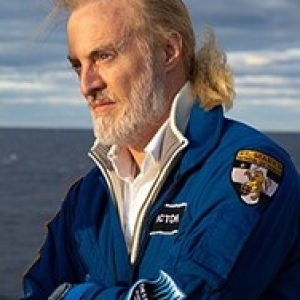
In 2018, Vescovo launched the Five Deeps Expedition, whose objective was to dive to the deepest location in all five of the world’s oceans by the end of September 2019. This expedition was filmed in the documentary television series Expedition Deep Ocean. This objective was achieved one month ahead of schedule, and the expedition’s team carried out biological samplings and depth confirmations at each location. Besides the deepest points of the five world oceans, the expedition also made dives in the Horizon Deep and the Sirena Deep, and mapped the Diamantina fracture zone.
In December 2018, he became the first person to reach the deepest point of the Atlantic Ocean, piloting DSV Limiting Factor, a reported US$50 million submarine system (Triton 36000/2) – including its support ship the DSSV Pressure Drop and its three ultra-deep-sea robotic landers – 8,376 m (27,480 ft) below the ocean surface to the base of the Puerto Rico Trench, an area subsequently referred to by world media as Brownson Deep.
On February 4, 2019, he became the first person to reach the bottom of the Southern Ocean, in the southern portion of the South Sandwich Trench. For this attempt, the expedition used a Kongsberg EM124 multibeam sonar system to achieve accurate mapping of the trench.
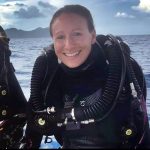
On April 16, 2019, Vescovo dived to the bottom of the Sunda Trench south of Bali, reaching the bottom of the Indian Ocean. Likewise, this was done aboard the Limiting Factor. The team reported sightings of what they believed to be species new to science, including a hadal snailfish and a gelatinous organism believed to be a stalked ascidean. The same dive was later undertaken by Patrick Lahey, President of Triton Submarines, and the expedition’s chief scientist, Dr. Alan Jamieson. This dive was organized subsequent to the scanning of the Diamantina fracture zone using multibeam sonar, confirming that the Sunda Trench was deeper and settling the debate about where the deepest point in the Indian Ocean is.
On April 28, 2019, Vescovo descended nearly 11 km (6.8 mi) to the deepest place in the ocean – the Challenger Deep in the Pacific Ocean‘s Mariana Trench. On his first descent, he piloted the DSV Limiting Factor to a depth of 10,928 m (35,853 ft), a world record by 16 m (52 ft). Diving for a second time on May 1, he became the first person to dive the Challenger Deep twice, finding “at least three new species of marine animals” and “some sort of plastic waste”. Among the underwater creatures Vescovo encountered were a snailfish at 26,250 ft (8,000 m) and a spoon worm at nearly 23,000 ft (7,000 m), the deepest level at which the species had ever been encountered. On May 7, 2019, Vescovo and Jamieson made the first human-occupied deep submersible dive to the bottom of the Sirena Deep, the third deepest point in the ocean lying about 128 miles northeast from Challenger Deep. The time they spent there was 176 minutes; among the samples they retrieved was a piece of mantle rock from the western slope of the Mariana Trench.
On June 10, 2019, Vescovo reached the bottom of the Horizon Deep in the Tonga Trench, confirming that it is the second deepest point on the planet and the deepest in the Southern Hemisphere at 10,823 m (35,509 ft). In doing so, Vescovo had descended to the first, second, and third deepest points in the ocean. Unlike the Sunda and Mariana Trenches, no signs of human contamination were found in the deep, which was described by the expedition as “completely pristine”.
Vescovo completed the Five Deeps Expedition on 24 August 2019 when he reached a depth of 5,550 m (18,210 ft) at the bottom of the Molloy Deep in the Arctic Ocean. He was the first human to reach this location.

 MN'24 | © Copyright 2023 Reflections Off The Grid | Bob Rein